
LB System: The NFL Doesn’t Need You to Succeed
Why player performance doesn’t drive the NFL’s economic model

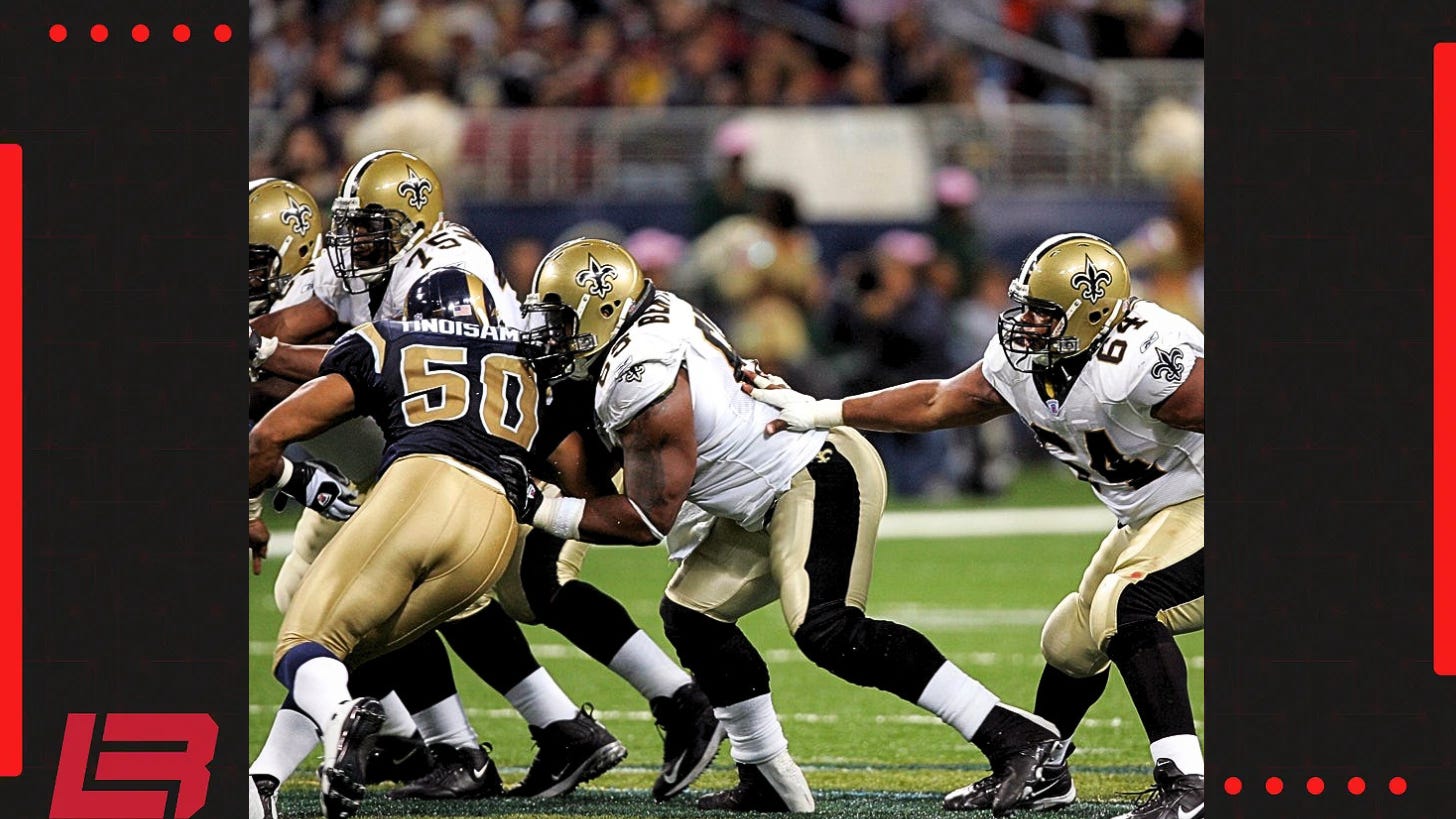
A player’s poor performance doesn’t disrupt the NFL’s economic model.
Nowhere is that more evident than in the offensive line room, where the performance gap between a starter and a backup is significant, and widening.
The league isn’t built on elite play in the trenches. It’s built on functional continuity.
The NFL generates over $23 billion annually, with media rights deals projected to drive more than $110 billion over the next decade.
The machine works and it works extremely well.
Which creates this hard truth for players to accept, the business model is designed to function with or without their success. The leagues success isn’t codependent on individual development.
In many cases, player’s struggles don’t hurt the system, they actually feed it.
Their struggles become content.
Their struggles become conversation.
Their struggles drive viewership.
And ultimately all of this drives more revenue.
When a player doesn’t understand this dynamic, they miss the truth. The model isn’t designed to develop them, it’s designed to win with or without their growth. Which leads to a broader question, “wouldn’t the NFL make more money if the players were better?”
The answer is no.
This isn’t the NBA where even a sixth man can become a global brand.
For example, Manu Ginóbili was a career sixth man, but a Hall of Famer, Olympian, and basketball international superstar. He was valuable to the NBA’s economic engine.
Now compare that to Trent Williams, arguably the greatest left tackle to ever play, but his jersey sells aren’t driving international markets. In the NFL, his value to winning football games is enormous, while at the same time his commercial visibility relative to his football value is microscopic compared to NBA stars. He’s not driving the NFL’s economy. This distinction isn't by accident and it highlights the structural difference between the business models and the actual sports.
Football disperses visibility because the helmet hides identity, while basketball allows for a deeper fan connection to the players. The roster sizes in football spreads recognition thin, while the same can’t be said for basketball. And ultimately the physicality of football creates constant turnover.
My 16yr old son has never lived a day on earth when Lebron James wasn’t a global superstar. That’s an incredible reality when you truly think about it. An entire generation has grown up with one player remaining culturally relevant, commercially visible, and central to the sport for over two decades.
Now compare that to the NFL. My son has already watched multiple eras of NFL stars come and go.
This is why the NFL doesn’t rely on individual player stardom to fuel its economy. It relies on the shield, on the game itself.
The game is the product. The experience is the economy.
Consider this, nobody goes to the circus for the clowns. Yes, the clowns matter, and they help create the show, but you’re truly there for the experience.
Which is why this reality exists, most fans couldn’t name an entire starting offensive line, let alone a backup, and the league doesn’t need them to. Because the circus is more valuable than the clowns.
It’s not a slight against offensive linemen, or NFL players in general, it’s simply structural economics. The machine works whether the audience fully understands the value of the work or not.
Once players understand this, their mindset changes, because many athletes subconsciously believe, “if I become valuable enough, the system will automatically value me.”
But football doesn’t work that way.
The league will celebrate production, monetize performance, and will reward usefulness. But the machine is always preparing for replacement. Because it has to.
That’s why development ultimately has to become personal. It’s not up to the coach, club, league, or agent.
It’s on them.
And that realization, while uncomfortable, is often the exact moment a player begins operating like a true professional.
Control what you can control, give it your best. At the end of the day you can look at yourself in the mirror and know that you gave it you all, no matter the outcome.
Hey LB,
We take another step in the realisation that we need to act for ourselves.
If we want improvement we must have then mental fortitude to make the decisions and do the work it takes and not rely only on what’s provided as often this is just not enough or inferior for our purposes.
I will be reading this several times along with all the other articles you have provided us on here to fully digest and appreciate your insights.
Thank you for sharing this and giving us your thoughts.
M